
0
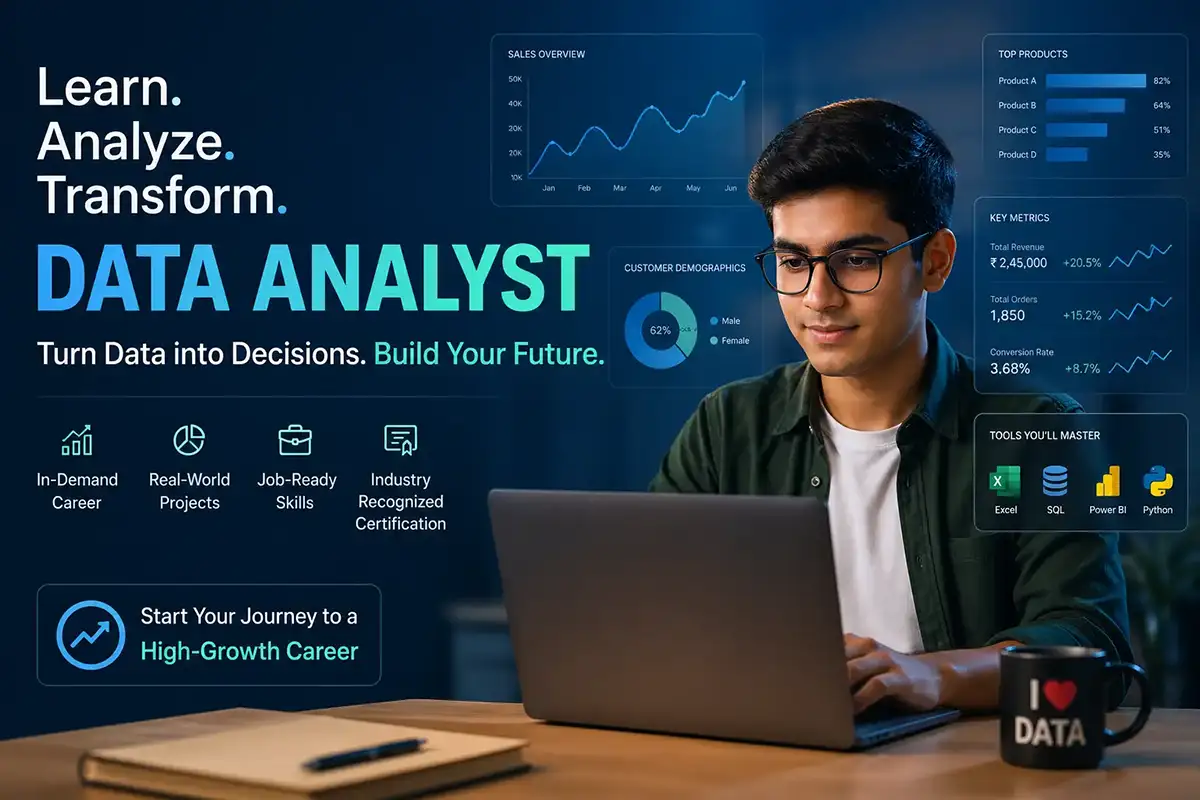
Data and analytics have become important parts of modern businesses. Companies use data to understand customers, measure performance, identify trends, and make business decisions. As demand for analytical skills grows, courses in data analytics can be useful for students, working professionals, and people looking to move into a new career.
In India, learners can choose between online and in-person training depending on their schedule, learning style, and career goals. Analyst-focused programs can cover tools such as Excel, SQL, Python, statistics, Power BI, Tableau, and other technologies used in data-related jobs.
Start With Data Analytics Basics
If you are new to analytics, it is useful to start with the fundamentals. Beginner courses can explain how data is collected, cleaned, analyzed, and presented.
You can also learn basic statistics and understand how businesses use data to solve practical problems.
A strong foundation makes it easier to move toward advanced tools and specialized analytics roles.
Learn Excel for Data Analysis
Microsoft Excel remains a commonly used tool for organizing and analyzing business data.
Excel-focused training can cover formulas, functions, PivotTables, charts, data cleaning, and reporting. Advanced learners can also explore tools such as Power Query and more complex formulas.
Excel can be a useful starting point for beginners because it allows them to work with real datasets without requiring programming knowledge.
Develop SQL Skills
SQL is an important skill for analysts who work with databases. It allows users to retrieve, filter, combine, and analyze information stored in database systems.
A SQL course can start with basic queries and gradually introduce topics such as joins, grouping, subqueries, and more advanced techniques.
Practical SQL exercises can help learners become comfortable working with business datasets.
Learn Python for Analytics
Python can take your analytical skills further. It is commonly used for data cleaning, analysis, visualization, automation, and machine learning.
Courses can introduce Python fundamentals before moving into libraries such as pandas, NumPy, and Matplotlib.
For learners interested in becoming data analysts or eventually moving toward data science, Python can be a useful addition to Excel and SQL skills.
Explore Power BI and Tableau
Data visualization is another important part of analytics. Tools such as Microsoft Power BI and Tableau allow analysts to transform data into interactive dashboards and reports.
Training can cover topics such as importing data, creating visualizations, building dashboards, and presenting business insights.
Learning these tools can help analysts communicate their findings to people who may not work directly with data.
Online vs. In-Person Training
Online training provides flexibility for students and working professionals. Learners can study from home and often choose schedules that fit around work or college.
In-person classes offer direct interaction with trainers and other learners. They may be useful for people who prefer classroom-based learning and face-to-face guidance.
The right format depends on your learning preferences, availability, and location.
Build Practical Projects
Courses are more useful when they include hands-on projects. Instead of only watching lessons, learners should practice with real or realistic datasets.
Projects can include sales analysis, customer analysis, financial reporting, marketing dashboards, or business performance reports.
A project portfolio can also help demonstrate your skills during job applications and interviews.
Choose a Course Based on Your Career Goal
Before enrolling, check the syllabus, duration, training format, projects, instructor experience, and tools covered.
Beginners may want a broad data analytics program, while experienced professionals can choose specialized training in SQL, Python, Power BI, Tableau, business analytics, or advanced statistics.
Final Thoughts
Analytics offers several career opportunities, and there is no single course that works for everyone. A good learning path should match your current skills and future career plans.
Starting with Excel and basic analytics, followed by SQL, visualization tools, and Python, can provide a strong foundation. Whether you choose online or classroom training, regular practice and project work can help turn course knowledge into practical analytical skills.
